Validation & Evidence
EmbrAIon has two related but different validation concepts.
Framework validation
embraion validate
This validates the installed EmbrAIon framework itself: schemas, catalogs, references, localization contracts, and other deterministic framework invariants.
Use it when verifying the EmbrAIon installation or developing the framework.
Project validation profiles
Consuming repositories define executable commands in .embraion/validation.yaml and run them with:
embraion validation run <profile>
Configure profiles first: Validation Profiles.
Inspect available project profiles:
embraion validation list
Run fresh evidence:
embraion validation run fast
embraion validation run affected --json
embraion validation run full --run-id task-001
Evidence behavior
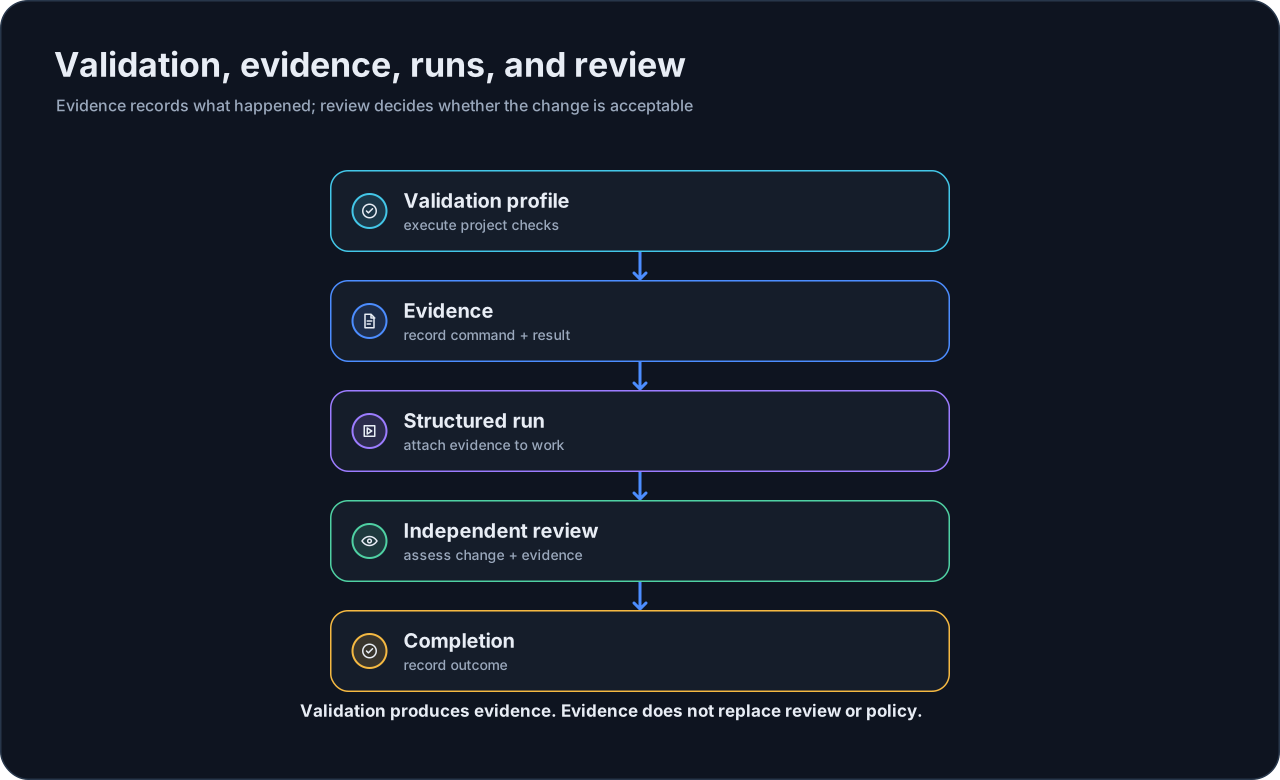
Commands execute sequentially from the project root. Each result records:
- profile and overall status;
- command identity;
- exit code;
- duration;
- redacted stdout/stderr tails;
- optional attached execution run;
- evidence ID/path.
Evidence is stored under:
.embraion/state/validation/
That is local runtime state and is ignored by the project-local .gitignore.
An empty profile reports skipped. A failed or timed-out command makes the profile fail. Use --fail-fast only when later commands are not useful after the first failure.
Validation is evidence, not a policy override
A green test result cannot override a failed privacy, permission, protected-path, compatibility, or security gate.
Likewise, behavioral eval improvement does not turn a deterministic safety failure into a pass.
Attach evidence to a structured run
embraion validation run affected --run-id task-001
The run must be active. The validation record is attached by evidence ID rather than re-entered as an unverified claim.
See Runs & Review and Enforcement.