Routing
EmbrAIon routing is model-agnostic.
Core decides the engineering constraints that should survive model churn:
The canonical task-oriented route classes are bounded-read, bounded-write, ordinary, substantial, complex, and critical. These describe work/risk, not model strength, price, or vendor tier.
- role;
- complexity / route class;
- data class;
- access mode;
- owned paths;
- validation and review requirements.
It does not maintain a canonical list of current model names.
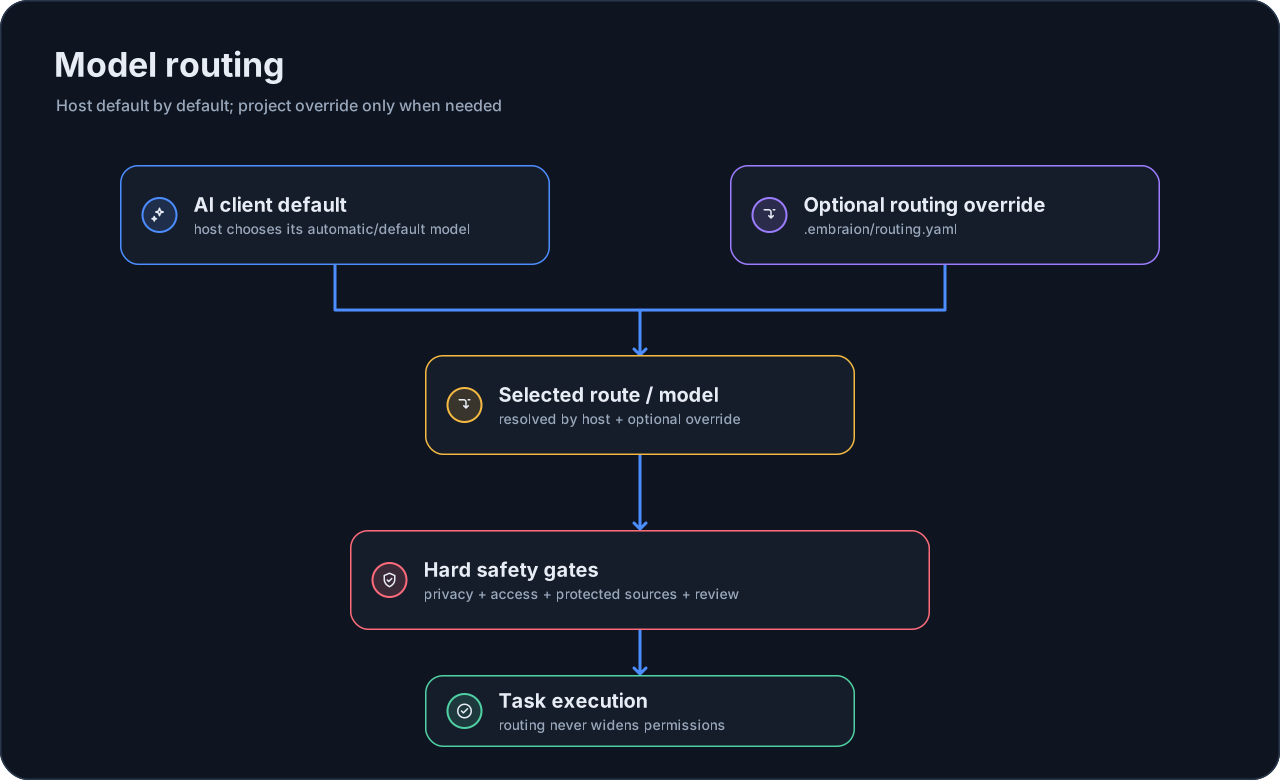
Default behavior
Without a project override, routing resolves to host-default. The selected host remains responsible for its own available models and automatic/default model policy.
embraion route --host codex --route-class substantial --data PRIVATE
A default result therefore has no framework-selected model:
{
  "host": "codex",
  "route": "substantial",
  "role": null,
  "resolution": "host-default",
  "model": null,
  "effort": null,
  "options": {},
  "data": "PRIVATE"
}
New models can appear in a host without requiring an EmbrAIon release.
Optional project overrides
A project may override a route or role in .embraion/routing.yaml:
overrides:
  codex:
    routes:
      complex:
        model: any-host-model-selector
        effort: high
    roles:
      reviewer:
        model: any-review-model-selector
        options:
          thinking: maximum
The strings are intentionally open-ended. EmbrAIon validates the structure, not a global model catalog.
Resolution precedence is:
- role override, when a role is supplied;
- route override;
- host default/automatic selection.
A role override is merged over the route override, so a role can replace only the fields it needs.
AI-First configuration
Every installed host projection includes the reusable routing-configuration skill. It tells the AI that model overrides belong in .embraion/routing.yaml under overrides, and that EmbrAIon itself has no model registry.
The intended user experience is therefore conversational rather than manual configuration. A user can simply tell the AI already working in the repository:
Configure EmbrAIon routing for this repository using the models currently available to you. Keep host-default where no explicit choice is needed. Put any model, effort, or host-specific overrides only in
.embraion/routing.yamlunderoverrides, mapped to the appropriate route classes or roles. Do not weaken privacy, access, ownership, validation, or review policy.
The AI should inspect host-native model choices when available, edit only the relevant override subtree, and verify the affected routes. Users may still edit the YAML directly, but they do not need to.
A user does not need to edit YAML manually. They can ask the AI client already working in the repository to inspect the models/settings available in that client and update the project's EmbrAIon routing overrides.
The AI should change only project overrides. It must not weaken privacy, access, owned-path, protected-source, validation, or review policy to make a model fit.
What EmbrAIon validates
EmbrAIon can deterministically validate:
- route-class names;
- data-class names;
- project-override structure;
- role/route precedence;
- access and privacy policy that is independent from model identity.
The execution host remains authoritative for whether a particular selector or option is actually available to the current user/account.
This separation keeps Core usable with future models and hosts that did not exist when the current EmbrAIon release was published.
Host-specific setup examples
See AI host configuration examples for Codex, GitHub Copilot, and Claude Code workflows.