Enforcement
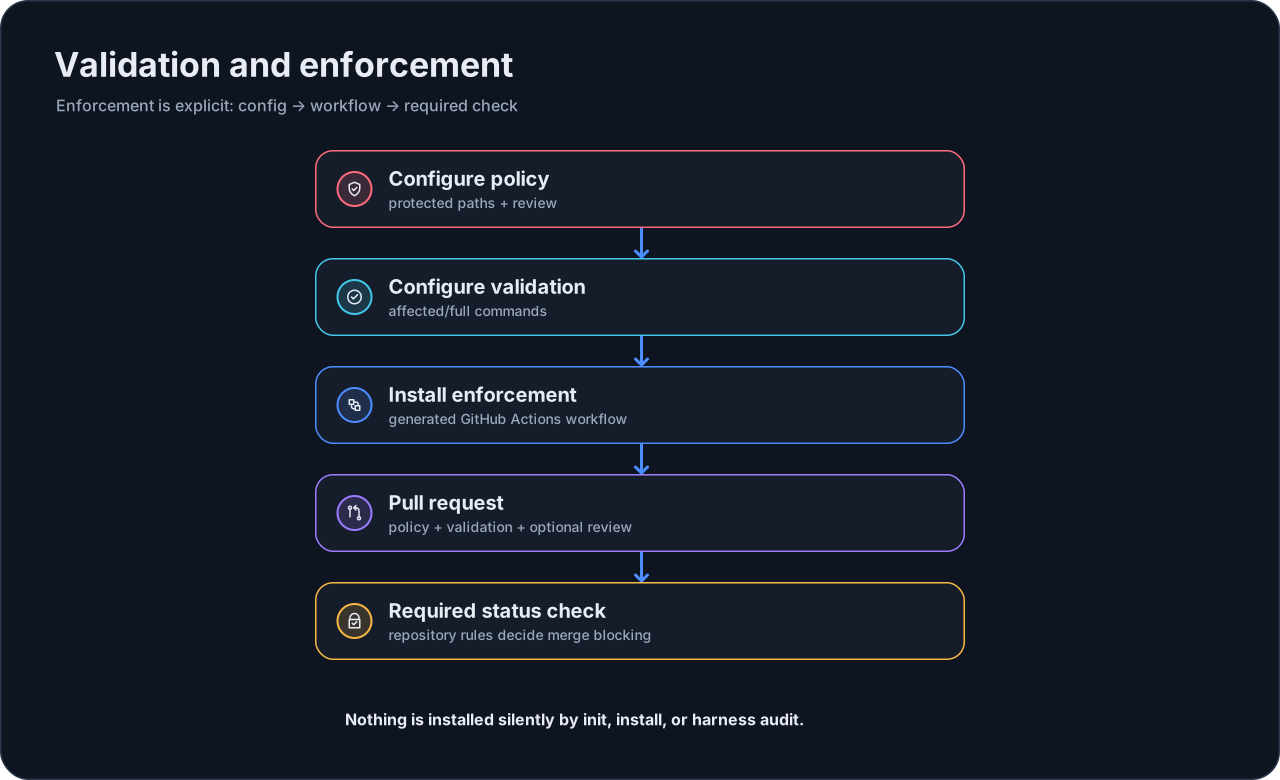
EmbrAIon separates project policy from merge-time enforcement.
Policy can exist without installing executable CI. Enforcement is explicit and opt-in.
Before enabling enforcement
First make sure these are trustworthy:
- protected/canonical/generated/external paths in
.embraion/policy.yaml; - the selected validation profile in
.embraion/validation.yaml; - review policy if review will be required.
Check them:
embraion doctor
embraion policy show
embraion validation list
embraion validation run affected
Do not use an empty validation profile as a merge gate; it will report skipped, not passed.
Inspect enforcement status
embraion enforcement status
By default enforcement is disabled.
Install the GitHub Actions surface
embraion enforcement install \
  --surface github-actions \
  --validation-profile affected
To require a current approved PR review as well:
embraion enforcement install \
  --surface github-actions \
  --validation-profile affected \
  --require-review
This explicitly creates:
.github/workflows/embraion-enforcement.yml
and enables the matching project policy block.
Existing different workflow content is not silently replaced; intentional replacement requires --force.
What the gate checks
The enforcement check combines:
- protected-source mutation detection;
- a fresh executable validation profile result;
- review evidence when configured.
Protected detection includes deletions, rename sources, and dot-prefixed paths.
Run it manually when useful:
embraion enforcement check --base-ref origin/main
With structured run evidence:
embraion enforcement check \
  --base-ref origin/main \
  --run-id task-001
Make it a mandatory merge gate
Installing the workflow does not automatically change repository branch rules.
If GitHub should block merges when the gate fails, configure the generated EmbrAIon enforcement status check as required in the repository ruleset/branch rules.
This separation is intentional: repository administration remains an explicit human decision.
What EmbrAIon does not do silently
embraion init, host install, and harness audit do not silently install executable hooks or enforcement workflows.
harness audit reports available surfaces; it is not an installer.